On 29–30 July 2026, at the invitation of
Academician Zhanyuan Lu, President of Inner Mongolia Academy of Agricultural
& Animal Husbandry Sciences, Prof. Duihu Ning, President of WASWAC, led a
delegation including Prof. Pengfei Du, Executive Deputy Secretary-General,
Prof. Liqin Qu and Dr. Ying Zhao to Hohhot for academic exchanges. Centering on
dry-farming, soil and water conservation, ecological agriculture and
sustainable agricultural development, the team conducted field visits at
research bases, held symposiums and gave presentations, to promote
collaborative innovation between WASWAC and local research institutes.
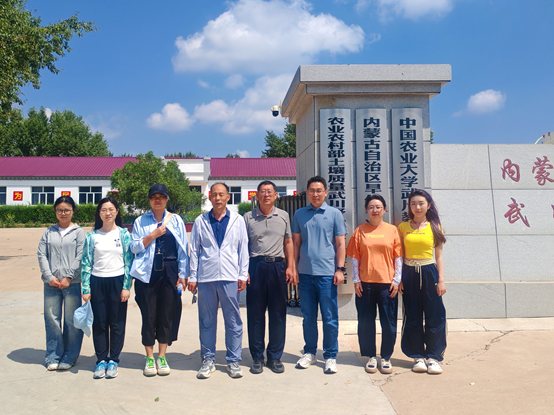
On 29 July, accompanied by Prof. Ju Zhao,
Vice-President of the Academy, Prof. Xingfu Zhang and Prof. Yahong Liu,
Directors of the Center for Comprehensive Test and Demonstration, the
delegation toured the Wuchuan Dry-Farming Experimental Station and the Siziwang
Research Base. They viewed dry-farming technology demonstrations, experimental
facilities for grassland and farmland soil and water conservation, and
germplasm resource cultivation of xeric forage for desert steppes. The
delegation gained insights into local agricultural conditions, research layouts
and practical ecological protection challenges across the arid and semi-arid
regions of Inner Mongolia.
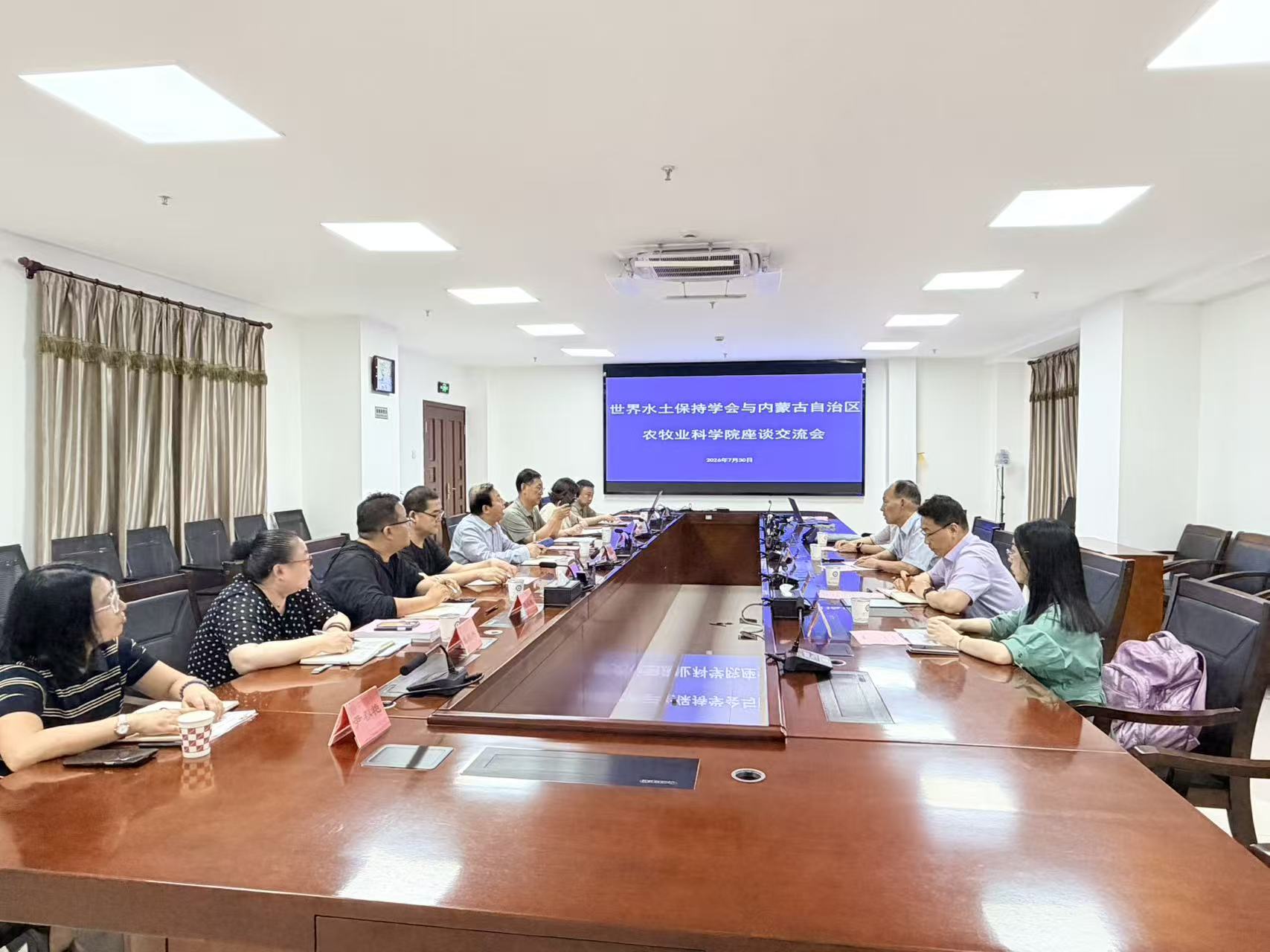
On 30 July, the WASWAC delegation visited
the Academy history exhibition hall to learn about the development history,
disciplinary layout and research achievements of the Academy. And they held a
symposium with key researchers from different departments.
Academician Zhanyuan Lu gave an overview of
the Academy, summarized progress made in agricultural animal husbandry
development and ecological protection across Inner Mongolia, and highlighted
practical needs and work priorities for promoting ecological agriculture and
advancing sustainable agricultural development in the region.
Prof. Ning briefed the participants on the
structure, operational activities and academic platform development of WASWAC.
He noted that Inner Mongolia constitutes a key component of China’s northern
ecological security barrier. Great challenges remain for soil and water
conservation in dry-farmland and grassland ecosystems. WASWAC looks forward to
further communication with the Academy. Practical cooperation will be expanded
in scientific research to joint projects, academic output and talent exchange,
to jointly support ecological protection and high quality agricultural
development in northern China. Participants had thorough exchanges on regional
soil erosion prevention and control, degraded land rehabilitation, and
technical models for ecological agriculture.
Then, the WASWAC delegation delivered 4
presentations to young researchers at the Academy. Prof. Ning presented a report titled Soil
Erosion in China and Discussion on Current Research Priorities, analyzing the
status of soil erosion in China and cutting edge research directions. Prof. Du shared experiences on gully
erosion control in black soil regions of China and practical practices for
black land erosion management. Prof. Qu addressed academic writing,
standards, ideas and methods for preparing scientific manuscripts. Dr. Zhao discussed frequent problems with
figures and tables in academic manuscripts, and shared best practices for
figure table making and standard formatting. These reports covered broad
research trends, regional governance practices and practical skills for paper
preparation. Young researchers asked many questions and gave positive feedback.
Moving forward, WASWAC will continue to
leverage its academic platform to strengthen cooperation with research
institutions, to integrate research resources and promote academic exchange,
and to provide professional support for regional ecological conservation and
sustainable agricultural development.
