On March
30, a special meeting of the Editorial Board of the International Soil and
Water Conservation Research (ISWCR), the official journal of WASWAC, was held
at the Secretariat of WASWAC. The current Editor-in-Chief
of ISWCR, including Prof. Michael Maerker, Chief
Scientist at the Leibniz Centre for Agricultural Landscape Research of Germany
and Prof. Baoyuan Liu of Beijing Normal
University, and the founding Editor-in-Chief,
Prof. Rui Li, the Honorary President of WASWAC, attended the meeting.
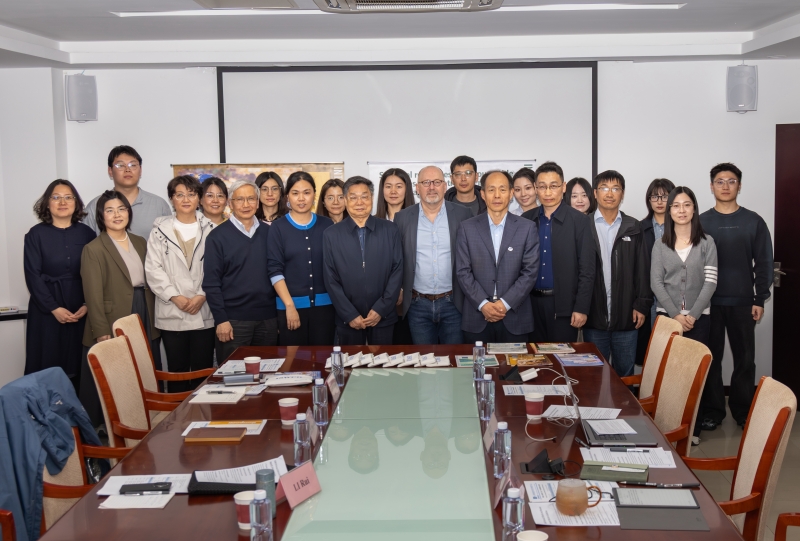
The
meeting was chaired by Prof. Paige Chyu, Executive Editor of the journal. Prof.
Duihu Ning, President of WASWAC, delivered a welcoming address, expressing
gratitude to the editorial board team led by the Editors-in-Chief for their
hard work and fully affirming the achievements of the journal. Prof.
Rui Li reviewed the development history of the journal and extended thanks to
all parties that have long cared for and supported the advancement of soil and
water conservation as a discipline and the growth of the journal. Prof. Paige
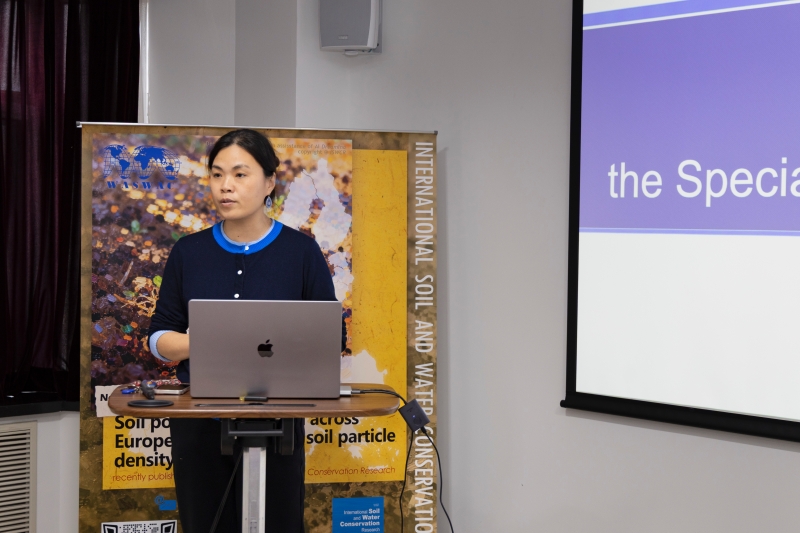
Chyu reported on the recent progress of the journal. With the chairmanship of
Prof.Baoyuan
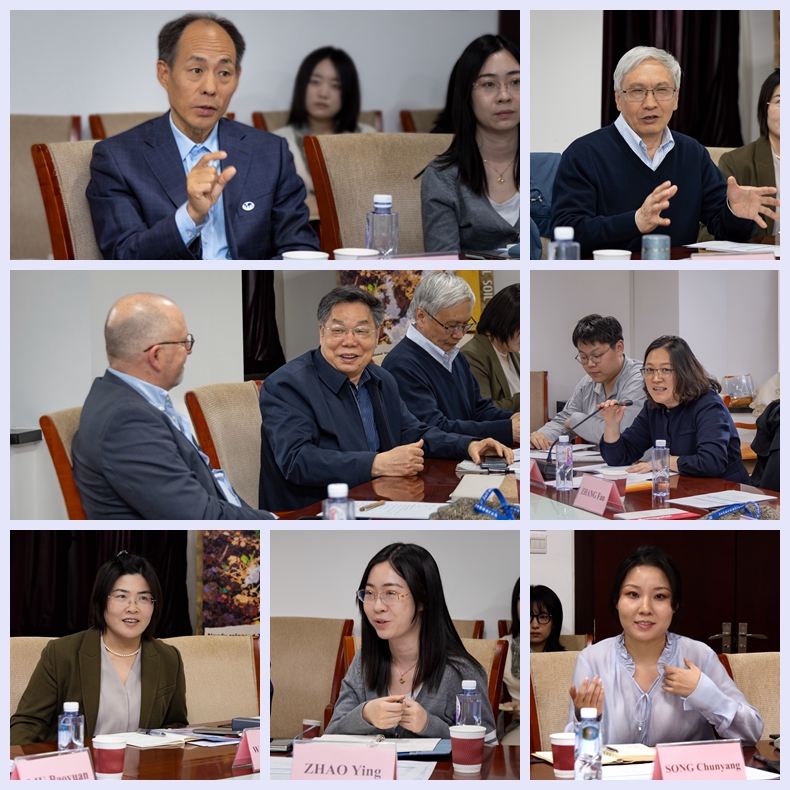
Liu, the participants had in-depth discussions on key topics including the
high-quality development of the journal, the expansion of international
cooperation, and the enhancement of academic impact. Prof. Michael Maerker
spoke highly of the journal’s performance in recent years, stating that it is
in a "highly influential developmental stage" and commending the
remarkable improvement in the quality of submissions over the past year. Ms.
Lijuan Xu, Associate Senior Editor of China Water & Power Press Co., Ltd.,
the publisher of the journal, emphasized that the press would continue to
provide strong support, work with the editorial board to optimize the
publication process, and fully promote the high-quality development of the
journal.
Prior to
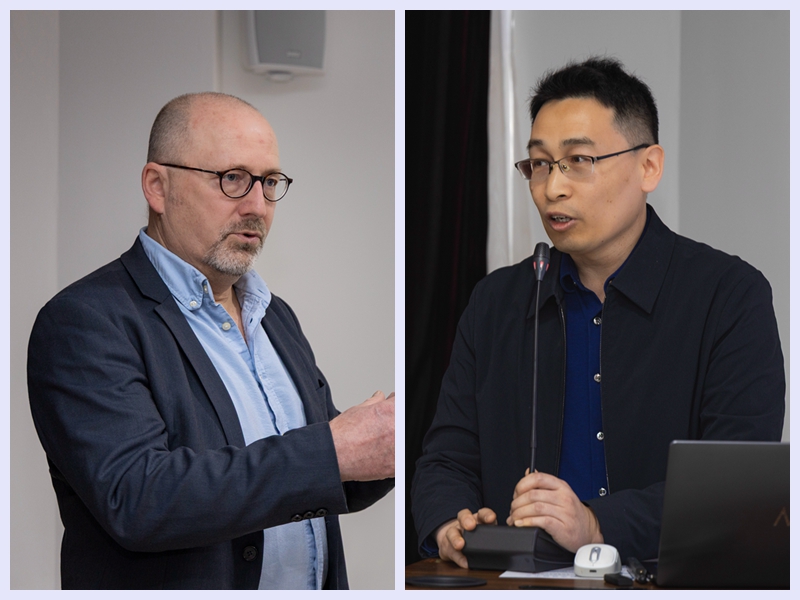
the special meeting of the Editorial Board, Prof. Michael Maerker delivered a
lecture at the "Global Vision Forum" of the China Institute of Water
Resources and Hydropower Research (IWHR). His presentation was entitled
“Agroecological Transitions in Agricultural Landscapes and Their Implications
for Soil Erosion”. The lecture was moderated by Prof. Pengfei Du, the Executive
Deputy Secretary-General of WASWAC.
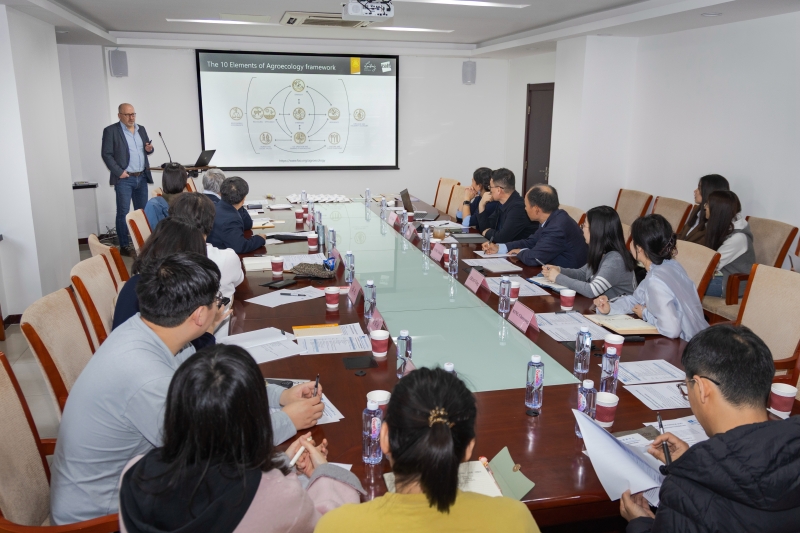
The report
elaborates on the connotation and basic principles of agroecology. Based on the
framework of FAO, it clarifies that its core lies in integrating ecological
principles and social concepts into the design and management of sustainable
agriculture and food systems, with a focus on key areas such as regenerative
agriculture, soil health management, biodiversity enhancement, and nutrient
recycling. It provides theoretical guidance for achieving the synergistic goals
of environmental health, economic sustainability, and social equity. Against
the reality of global agricultural development, the report analyzes the severe
current situation of land degradation and soil erosion. Citing relevant
research data, it points out that soil loss has reduced global agricultural
food production by more than 30 million tons, which in turn has driven up
global food prices by up to 3.5%. The annually economic losses caused by water
erosion alone amount to as high as 8 billion US dollars.
Prof.
Michael Maerker also presented the achievements of the AGRECO4CAST project led
by his research team. Funded by the European Union, the project has established
a standardized evaluation framework to promote the application of
agroecological practices in perennial cropping systems across Europe, such as
vineyards, olive orchards and fruit orchards. By
combining customized monitoring schemes and tailored transition pathway design,
the project provides scientific support for agricultural development in Europe.
In the discussion,
participants from the Beijing Normal University, Northwest University (China),
the Institute of Soil and Water Conservation of Northwest A&F University,
the Institute of Tibetan Plateau Research of Chinese Academy of Sciences, China
Water & Power Press Co., Ltd., and other institutions had an in-depth
exchanges with Prof. Michael Maerker on topics including agroecological support
mechanisms in Europe and practical pathways for the implementation of soil and
water conservation measures.



